How-to guide
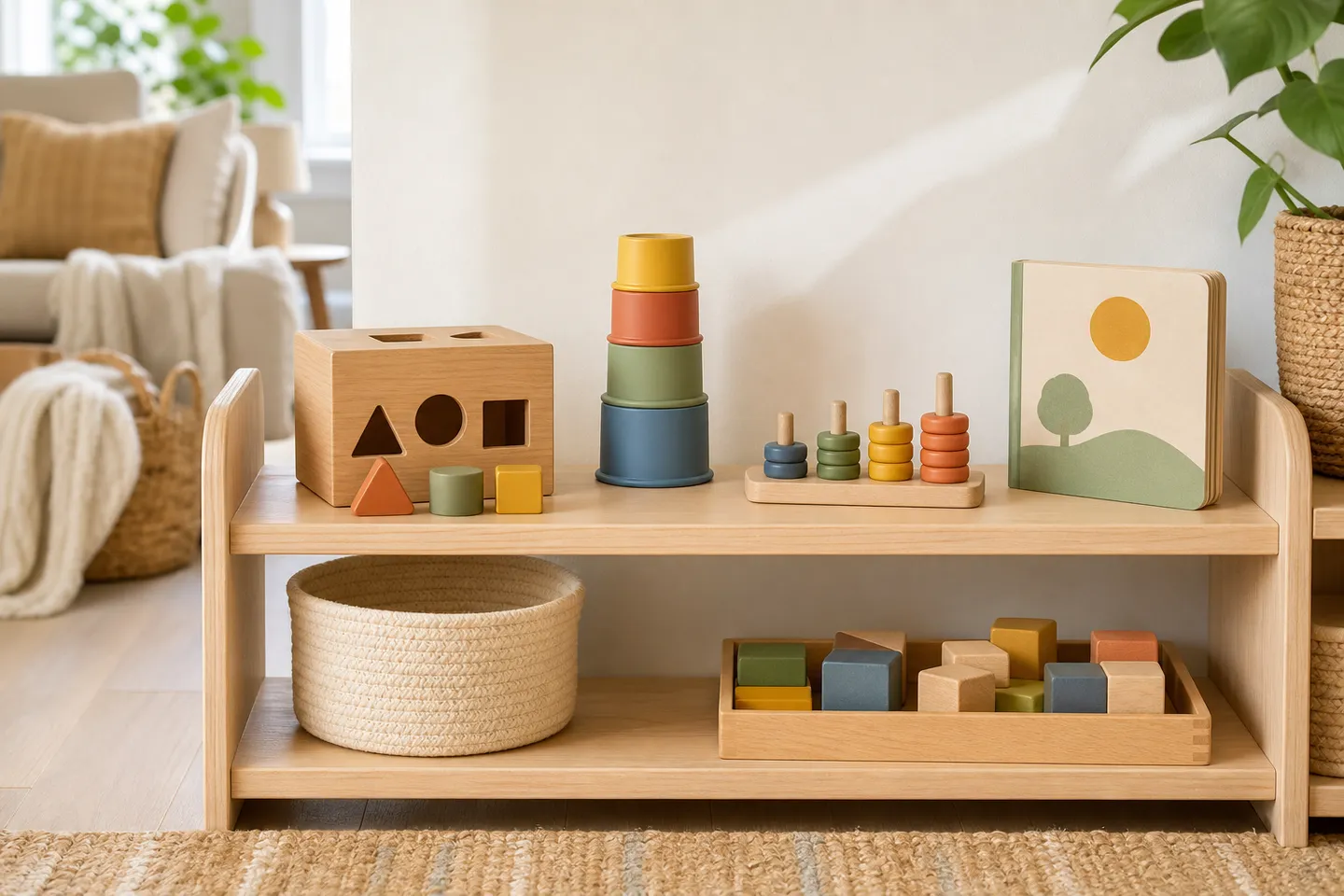
How to Choose Toddler Toys for a Small Space
A parent-friendly checklist for footprint, noise, cleanup, loose pieces, and repeat play.
Disclosure: Some links on this page are affiliate links. As an Amazon Associate I earn from qualifying purchases.
What may be happening
What is the smallest useful next step?
A useful shelf starts with the child and the real constraints of the home, not with a long product list. The goal is a clearer invitation to repeat play.
What to observe
Look for the repeat.
Notice what is repeated, what gets ignored, how the activity resets, and whether the pieces fit the time and space you actually have.
Try this before buying
Make one smaller change.
Before buying, simplify the shelf to two or three distinct roles and see whether one familiar activity becomes more useful again.
Shortlist
 Fine motor
Learning Resources Spike the Fine Motor Hedgehog
Removable quills give toddlers a contained insert-and-remove activity with easy storage.
Why it fits: Useful when a child is ready to repeat grasp, place, and remove actions with a clear reset.
Practical tradeoff: Removable pieces need a reliable storage and cleanup routine.
Try before buying: Try a large, supervised container-and-lid activity with items too large to be choking hazards before buying a dedicated toy.
Listing-based research; not hands-on tested.
Buy on Amazon Shape sorting
Learning Resources Sunshine Shape Sorter
A compact sorter gives toddlers a clear matching task without a large footprint.
Why it fits: The visible shape-and-hole relationship gives a toddler one manageable problem to repeat.
Practical tradeoff: A sorter can frustrate a child who only wants an easy in-and-out action right now.
Try before buying: Use a small basket and a few large, clearly different household objects for a supervised matching or in-and-out activity first.
Listing-based research; not hands-on tested.
Buy on Amazon Open-ended stacking
Green Toys Stacking Cups
Cups can be stacked, nested, scooped, and used in water play.
Why it fits: One set supports stacking, nesting, filling, dumping, and water play as interests change.
Practical tradeoff: Cups are flexible but may feel less interesting if the child wants a clear matching challenge.
Try before buying: Nested food-storage containers or large cups can show whether filling, nesting, and dumping are the real interest.
Listing-based research; not hands-on tested.
Buy on AmazonChoose the play role
Measure storage and reset time first
Skip a toy that must stay out all day if your home needs a fast return to adult space.
What to look for
Use the guide to make one practical choice at a time. Favor a clear play role, a realistic reset, and a setup that fits the storage and routine you already have.
How we review options
What earns a place on the shelf.
We focus on the toy's current fit, repeat play, and whether it works in a real home.
- Age fitCheck the current manufacturer age label and warnings.
- Play patternLook for sorting, posting, stacking, building, or pretend play that can be repeated.
- Parent practicalityConsider noise, cleanup, footprint, batteries, and how pieces are stored.
- Honest limitsWe do not claim hands-on testing, professional credentials, or a guaranteed developmental result.
What to consider
Choose for the job this toy needs to do.
Build around a small number of play roles, then adjust for your storage, budget, and child's current interests. The goal is a useful shelf, not a perfect-looking one.
Before you buy
Use the current listing.
- Prices and availability can change.
- Confirm the current age label, warnings, and included pieces.
- Use the product page to check measurements and return details for your home.
Good next question
What is the smallest change that would make the shelf easier to use this week? Start there before adding more toys.